
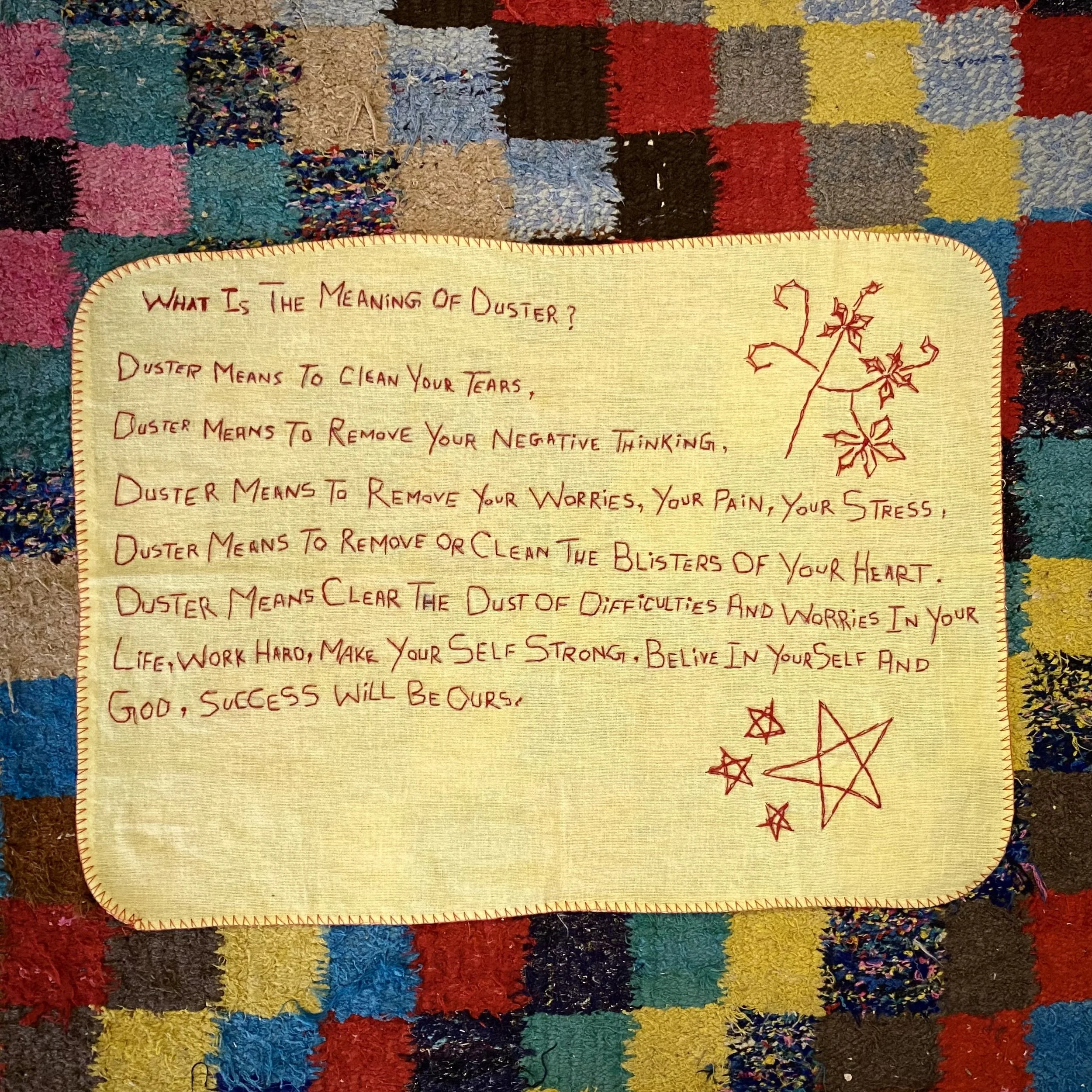
“Domestic Dusters” - psychosocial feminist embroidery workshops
Laughter and low voices fill a colourful, airy room. A group of women are sitting around a painted table, calmly stitching bright red thread onto scraps of yellow cloth. Some of the embroideries are intricate - human forms, images and poetry; some feature bold words standing alone - ‘love’, ‘hope’, ‘resilience’ ‘freedom’.
This is a Domestic Dusters workshop, run by activist-academic Vanessa Marr in collaboration with Makani and a group of women seeking sanctuary in the UK. The yellow cloth is the traditional yellow duster, evoking ideas of domesticity, women’s work and homemaking. In these hands however, in this space, it is being subverted, transformed into a vessel for self-expression and protest.
Through a series of workshops with 12 women in 2024, participants were taught simple stitching patterns, and given room to explore ideas of gender, homemaking and refuge, with emotional support on hand from a qualified therapist. Personal stories were shared in a safe space, where sympathetic ears listened and kind hands rubbed shoulders. Prompted by the gendered cloth, conversation focused on the ways in which displacement in the UK has opened up new opportunities for female equality (such as an escape from patriarchal expectations, or opportunities to speak out through projects run by various charities), contrasted with the ways in which coming to the UK has disempowered women and made them more vulnerable (for example, the lack of right to work for asylum seekers which traps women in an impoverished limbo, the rough sleeping and insecurity that many experience, and the frightening and isolating experience of being scapegoated). These conversations, emotions and experiences came through into the dusters stitched by the group.
We came back together in 2025 to do a follow up project, opening the group up more widely, and giving participants DIY duster packs to do with friends and family. In the words of participant Zilal; “I get a lot of joy from spending time with you people, helping others, and sharing our thoughts with each other. I like what we do here. I have also given some dusters to my sister and we work and talk together.”
Below we have gathered together some of the dusters created by the group, alongside some of their testimonies. Together, stitches and stories speak of emotional as well as physical journeys, of resilience as well as trauma. Most of all they say: ‘This is who I am. I have been through so much. Please understand me. I just want to live freely.’
All names have been changed to protect identities.
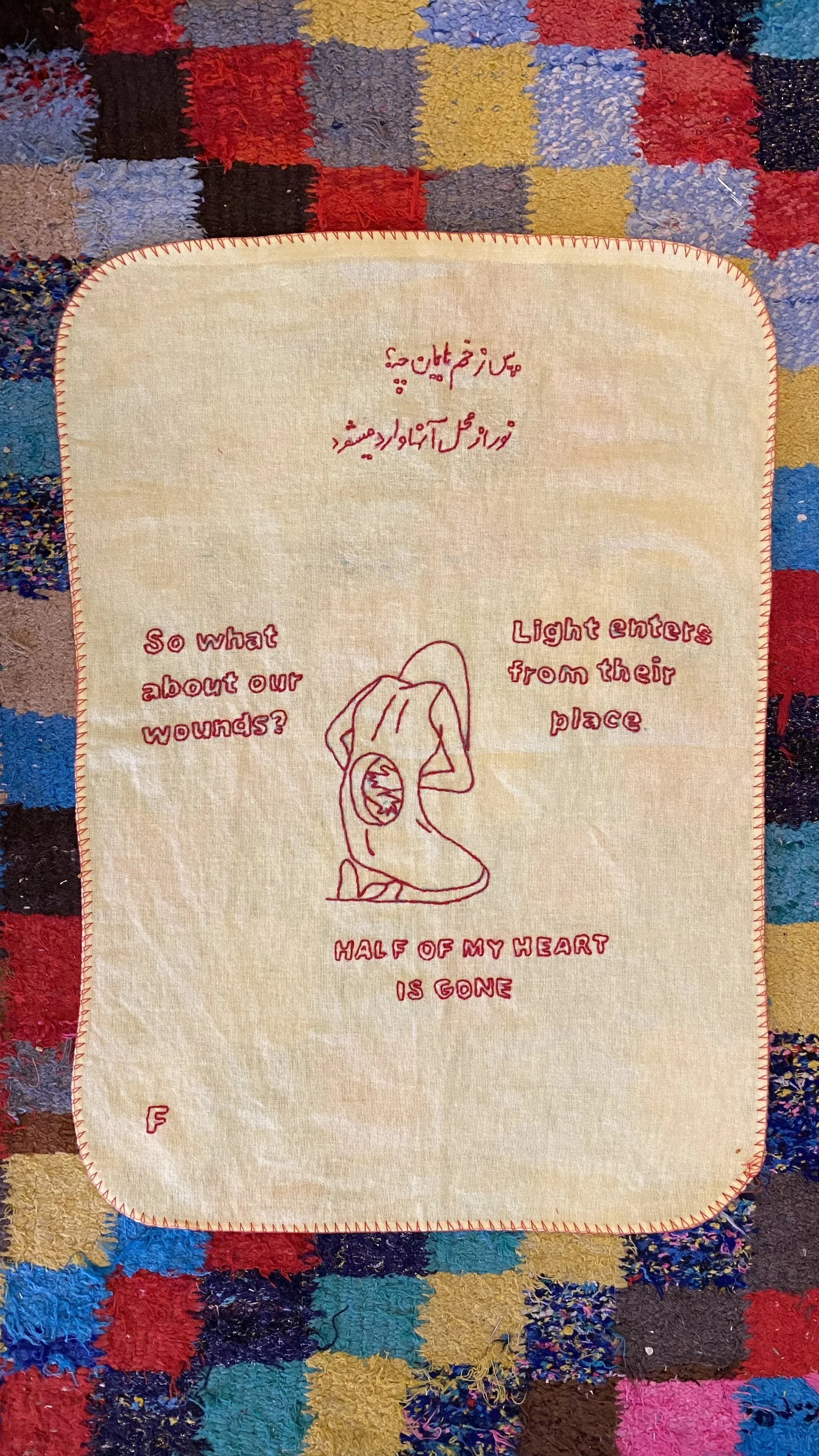
'So what about our wounds? Light enters from their place' - English & Farsi (Iran)
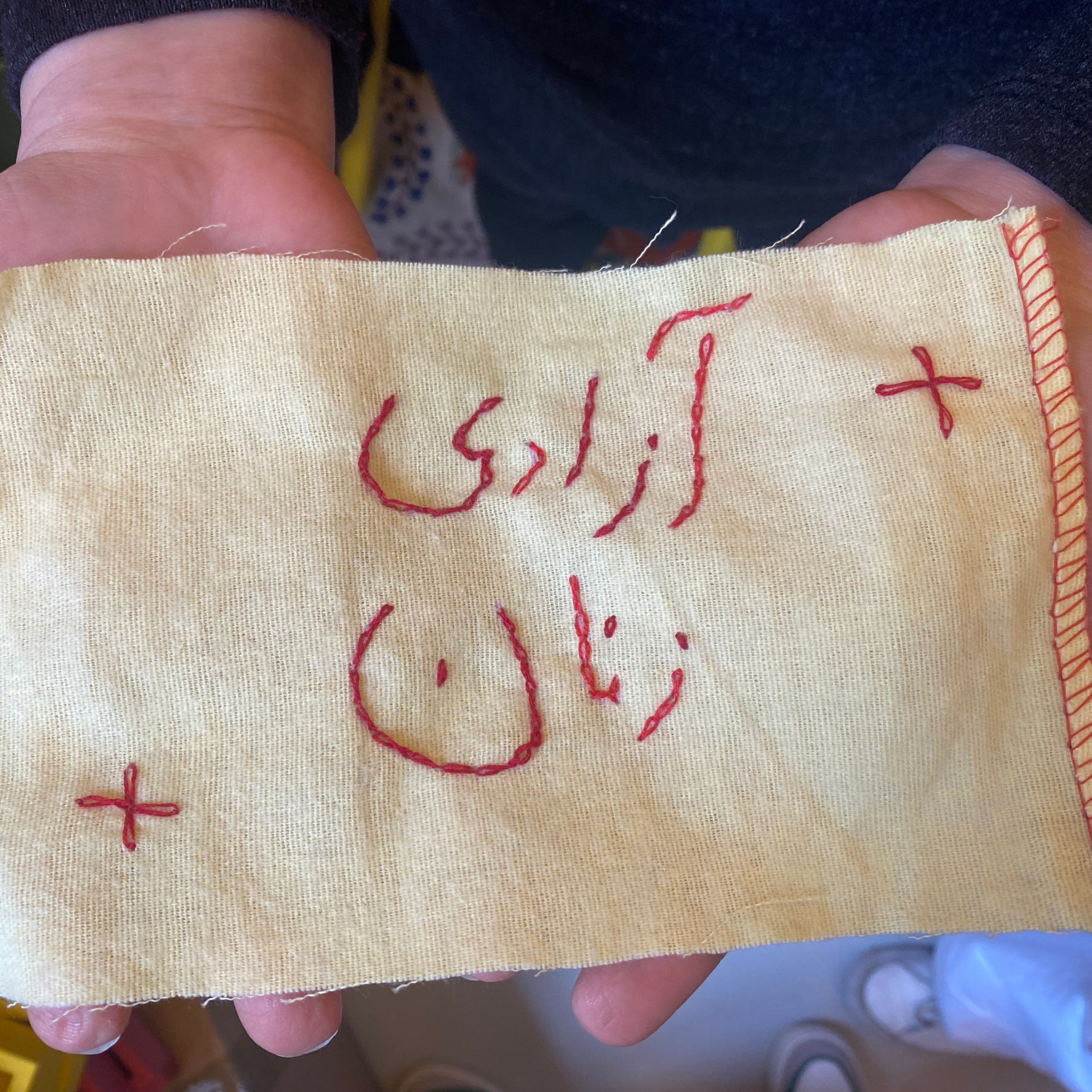
'Freedom for Women' - Farsi (Iran)
Nilufar’s testimony (Iran)
“Ten years ago, during Ramadan, my husband and I went out shopping. I was nine weeks pregnant with my second child and I had to drink water. A government agent came to us and told me that I should not eat or drink during Ramadan.
I told them I was pregnant, but they took me and my husband to their base, interrogated and threatened us. I suffered a nervous attack, and I lost my child.
I became depressed. I tried to get pregnant again but even with medical treatment, I could not give birth to a child. I felt empty and that I had completely lost my womanhood.
I lost my faith in Islam and became a Christian. Leaving Islam in my country is equal to death, and when the government found out, I had to leave.
Living as a refugee is very difficult because you have to live in a room in a hotel with no facilities. You face many bad things and it is very difficult with my bad mental condition. But I am very happy to go to church and that my family is no longer in danger. Life is full of challenges, but it improving and I hope it will be better in the future.
I thank all the good people of UK because they helped me and my family a lot. Of course, some people don't consider us human, but we also want basic human rights like freedom. We didn't want to live in a dictatorship. Please understand us.”
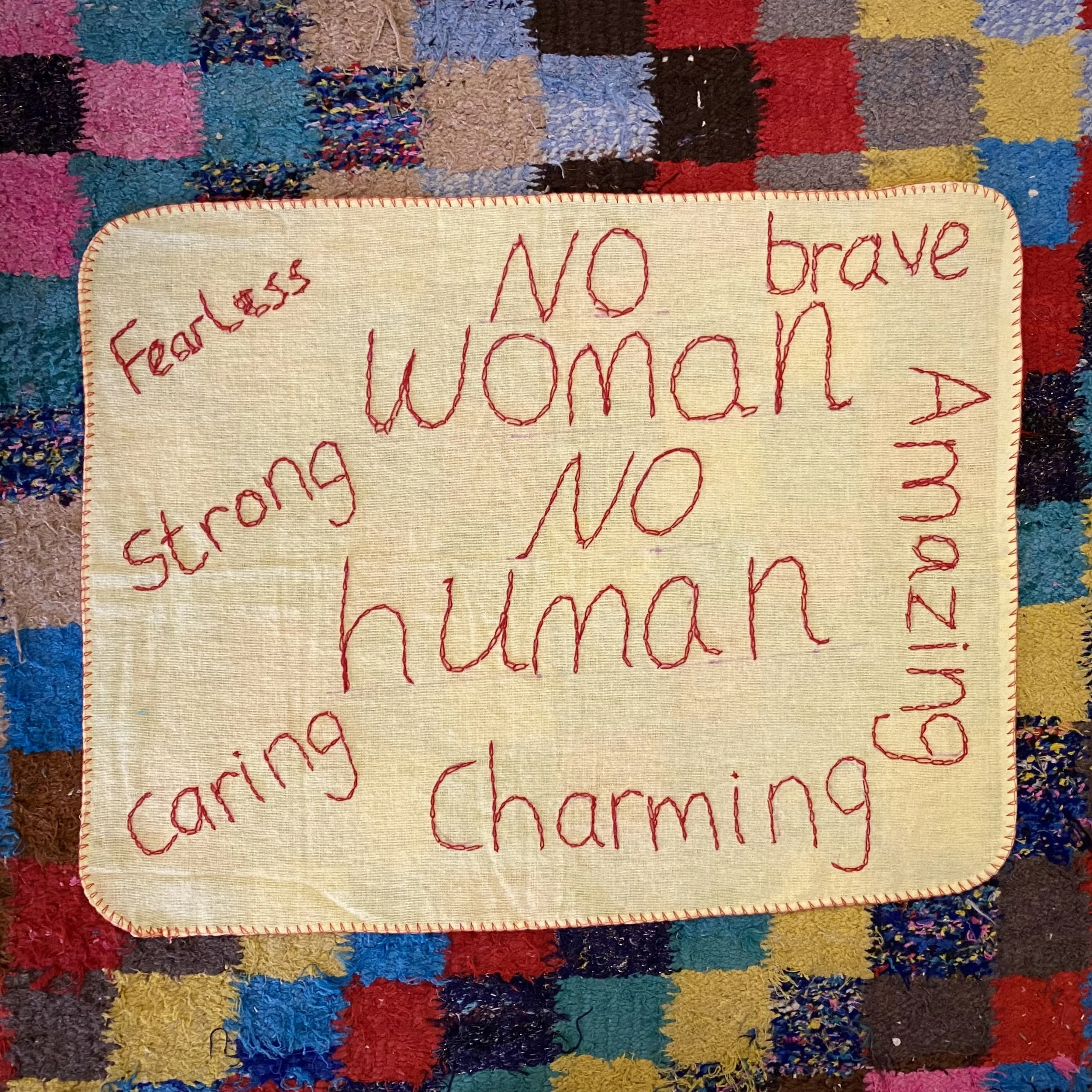
'No woman no human' (Nigeria)
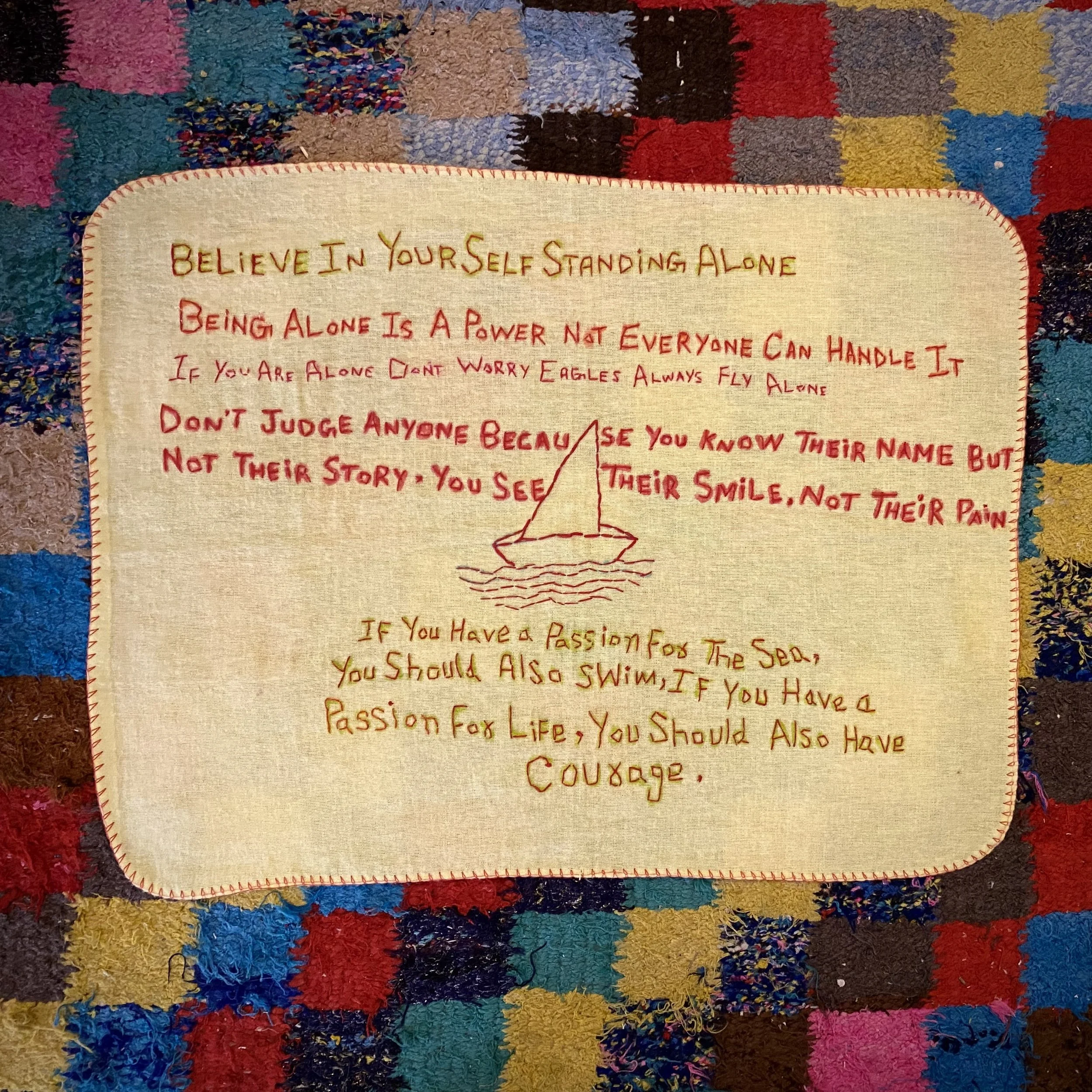
'Believe in yourself standing alone' (Pakistan)
Adunola’s testimony (Nigeria)
“I went through a lot in my country. I escaped war and famine which destroys life and communities. I came to London to seek a better life.
But when I got here, life wasn’t good at all, it was rough. I was homeless for roughly twenty years, moving all over the city.
Finally one day I met a lady who told me about a charity that could support me. I went there and they gave me support to find legal aid, so I started putting my application to the Home Office.
I am partially okay now, but the trauma is still too much for me. I am still going to talking therapy. I go to several groups run by charities that provide support and friendship.
My message to the people of the UK is that they should not give up, because there are still good people in this world.”
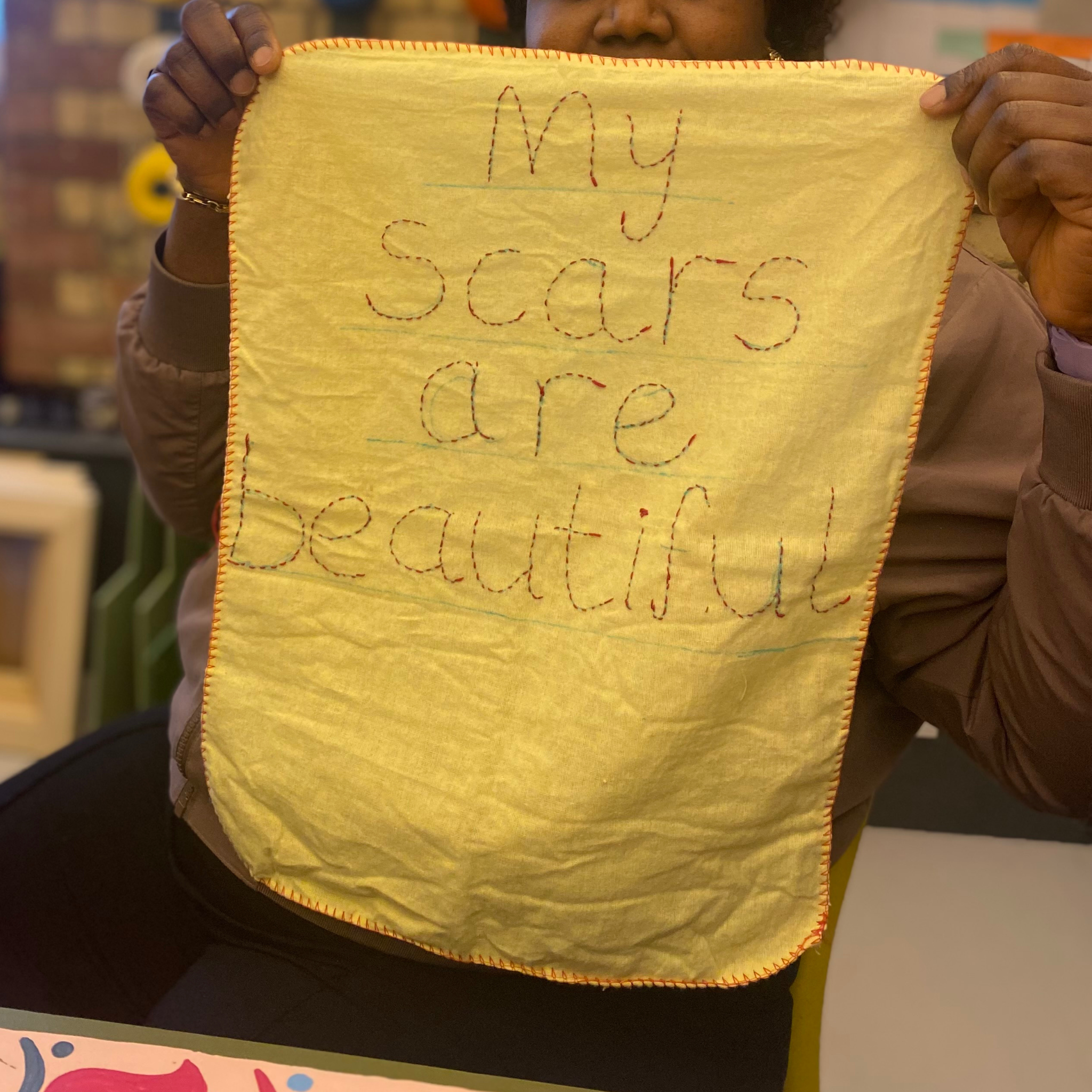
'My scars are beautiful' (Nigeria)
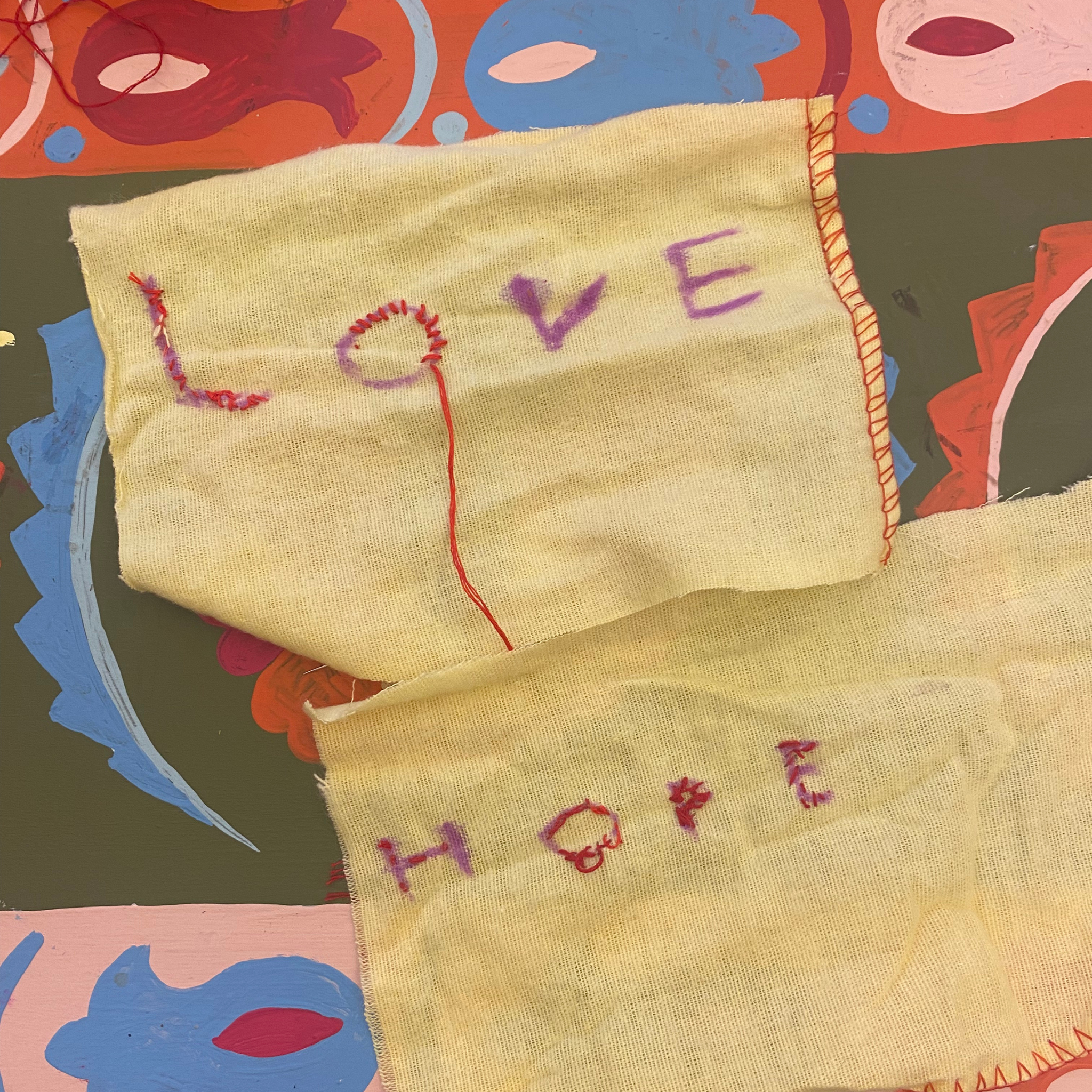
'Love' & 'Hope' (Vietnam)
Blessing’s testimony (Nigeria)
“When I first got to the UK life was not good. I didn’t know anybody. I couldn’t speak very much English and communicate the things I needed, and nobody cared.
It was another asylum-seeker who helped me most. I was living in temporary accommodation and I had asked the receptionist for period supplies. She wouldn’t help me and I started to cry. Another woman living in the accommodation found me and showed me the charities that would help me, not only with sanitary supplies but with legal support, supermarket vouchers, and creative projects. My priest also helped me. He raised donations so that my children didn’t have to sleep on the floor, and we could buy a mattress. He prayed for us.
Life now is better because I have found organisations that have given me a platform. I am an advocate for causes I care about. I go to parliament to speak. I do arts projects so I can express myself.
Some people in the UK don’t understand what asylum seekers are passing through. Believe us. We didn’t come here for the benefits, we want to contribute.
My message to asylum seekers and refugees is believe in yourself, be yourself, do your thing. There is light at the end of the tunnel and things will get better.”
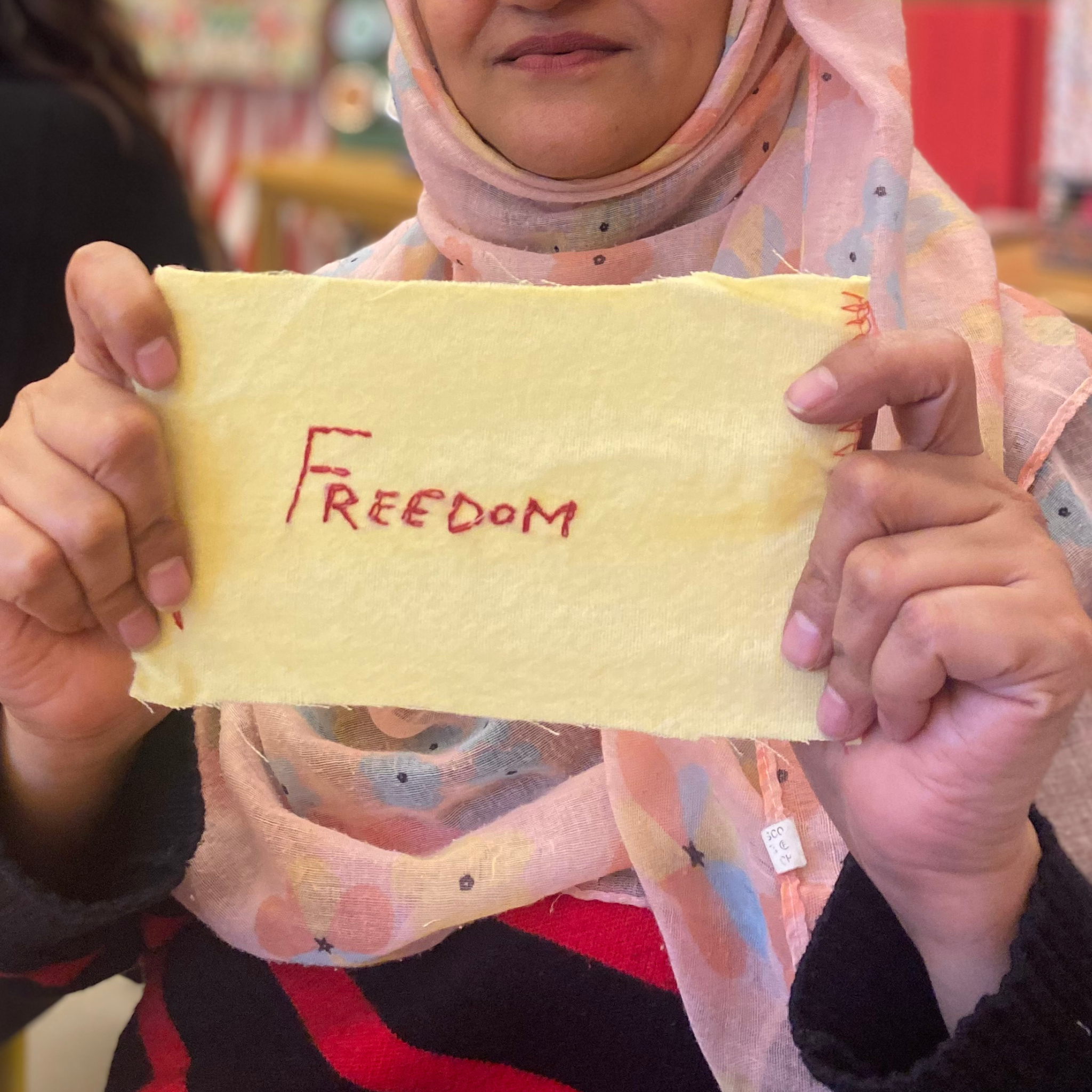
'Freedom' (Pakistan)
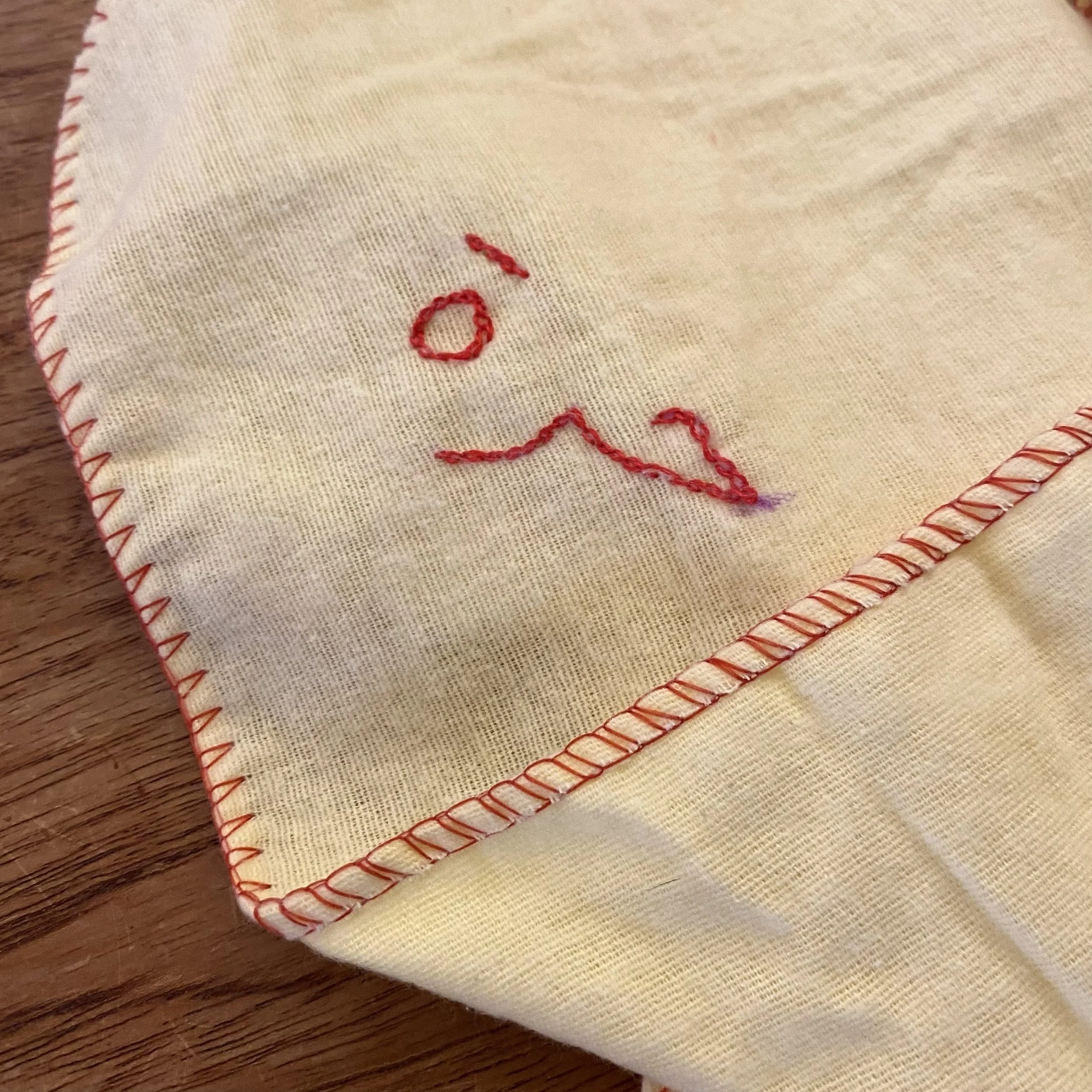
'Hurra' means 'Freedom' in Arabic (Syria)
Dusters on display
Thanks to the visibility of the wider Domestic Dusters project, dusters created by the group have been on display numerous times, prompting inclusion of the experiences of women seeking sanctuary in broader conversations about marginalisation and equality.
University of St. Andrews, Scotland, March 2025. Vanessa shared the project with staff in a research seminar, whilst dusters joined the Say No! feminist art exhibition in the university’s Wardlaw Gallery.
University of Brighton - Domesticity Under Siege conference, April 2025. Vanessa also delivered a paper reflecting on her collaborations with Makani and We Care (a group supporting unpaid carers): “It was so moving and powerful to see the dusters fill the vast the space of Elm House at the Moulsecoomb campus, where business and law students complete much of their studies, and to see the reactions of staff and conference guests, as they related to many of the experiences expressed in stitch on the dusters.”
Other displays include Feminist ‘Never Made for Us’ pop-up exhibition in London; Lewes town centre, Sussex; Thread Republic’s Textile Citizens exhibition in Huddersfield.
Radio Reverb in Brighton, BBC Radio Sussex, Needle Exchange podcast
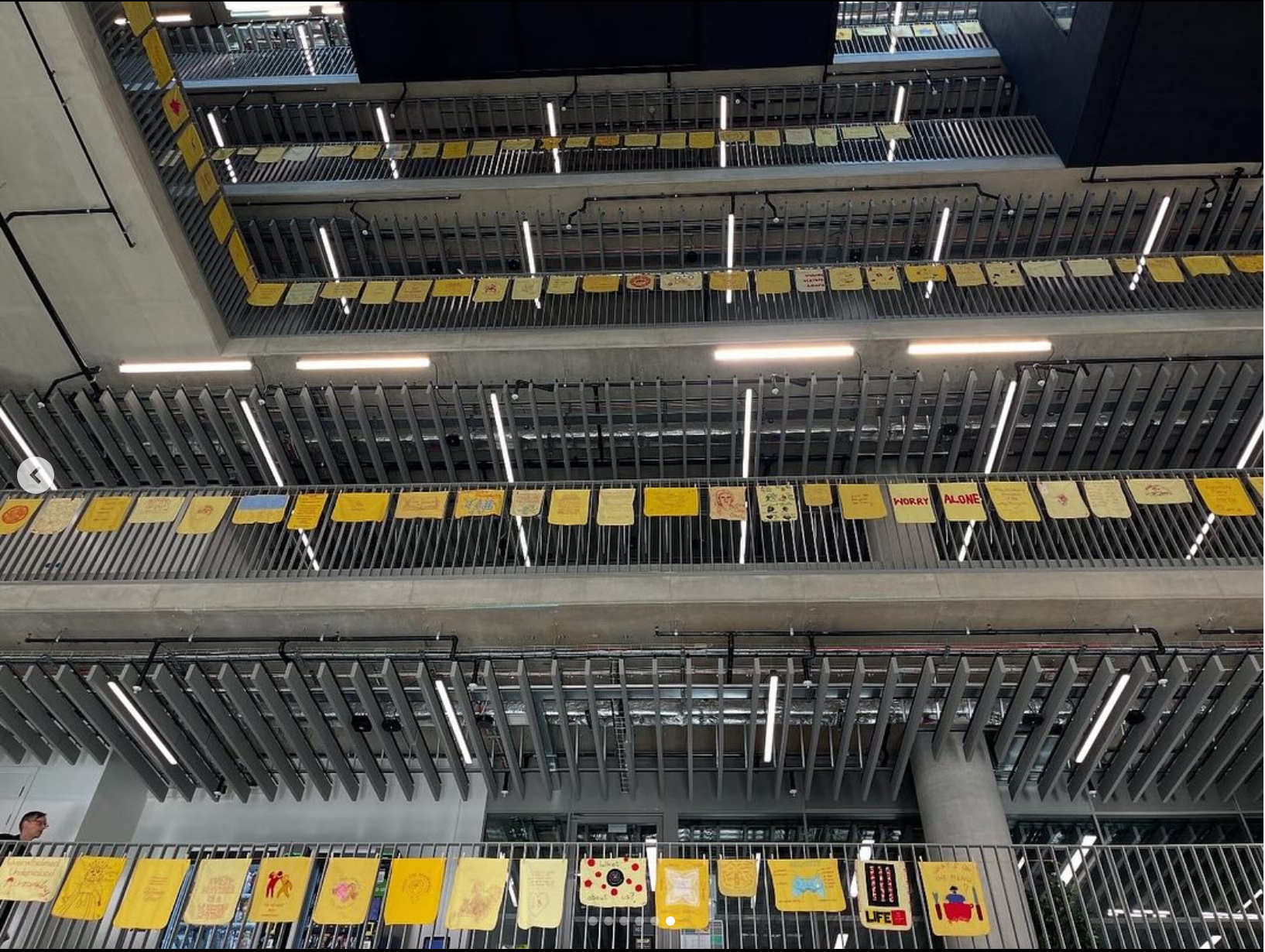
Brighton University
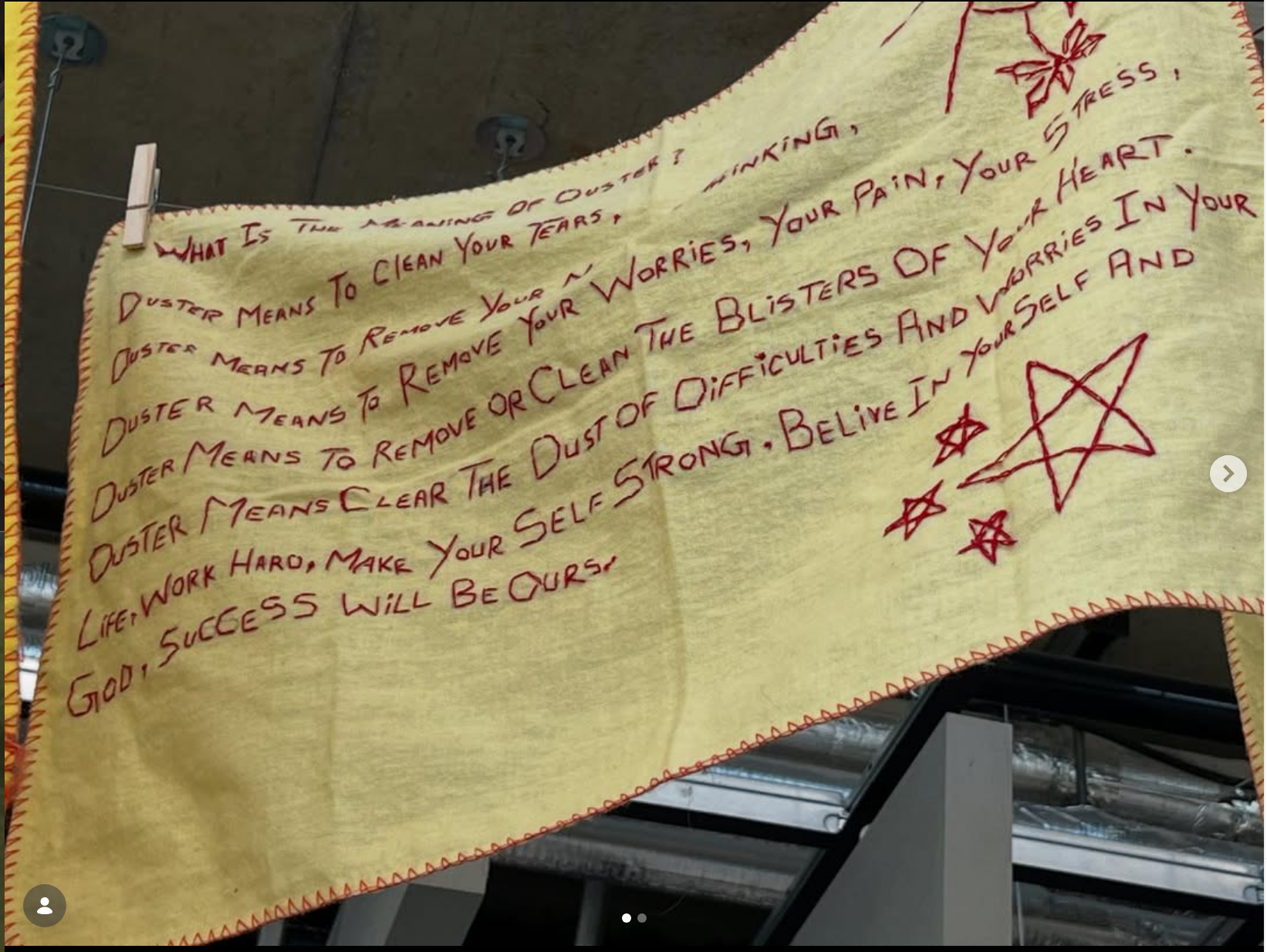
Brighton University
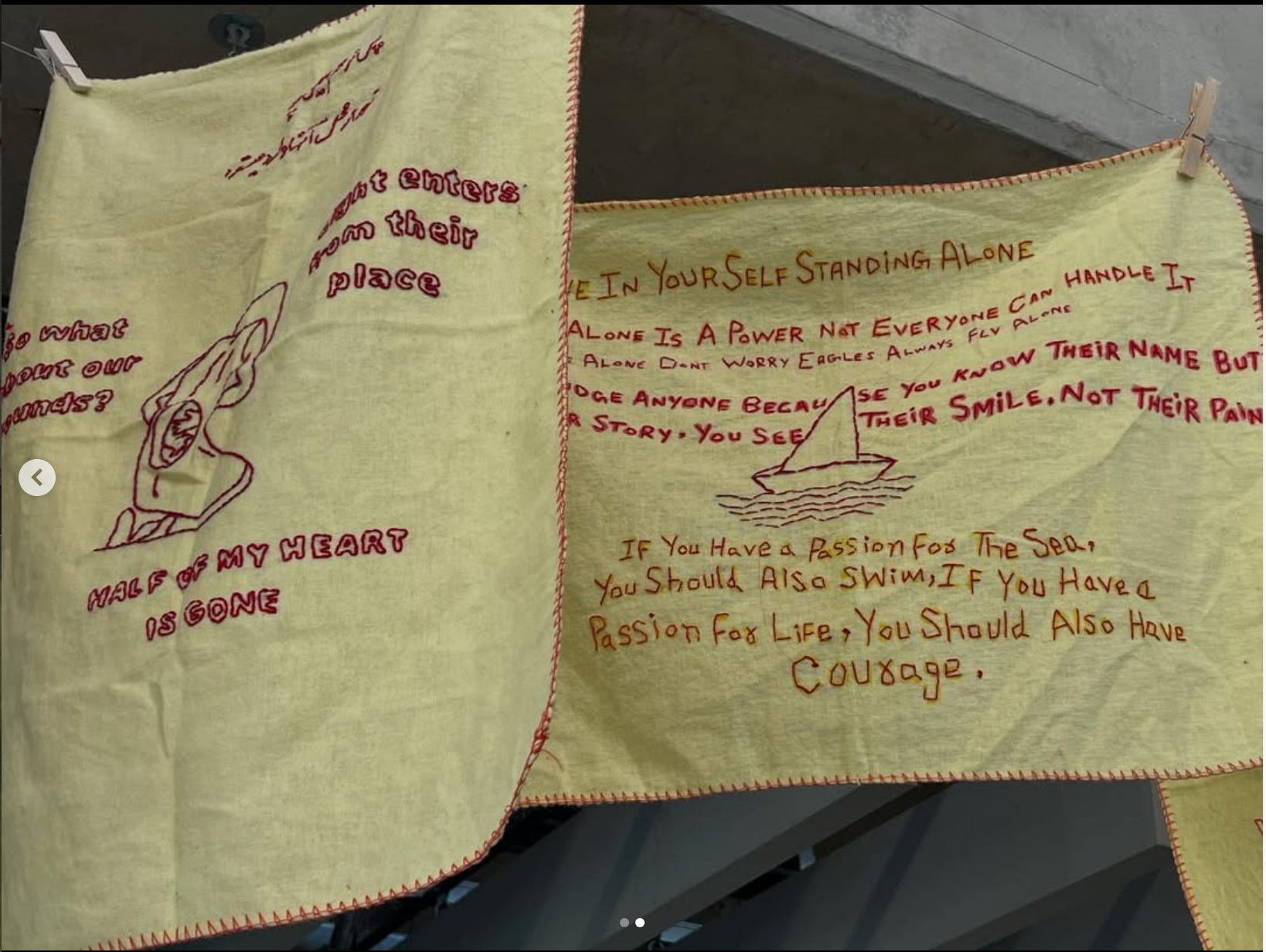
Brighton University
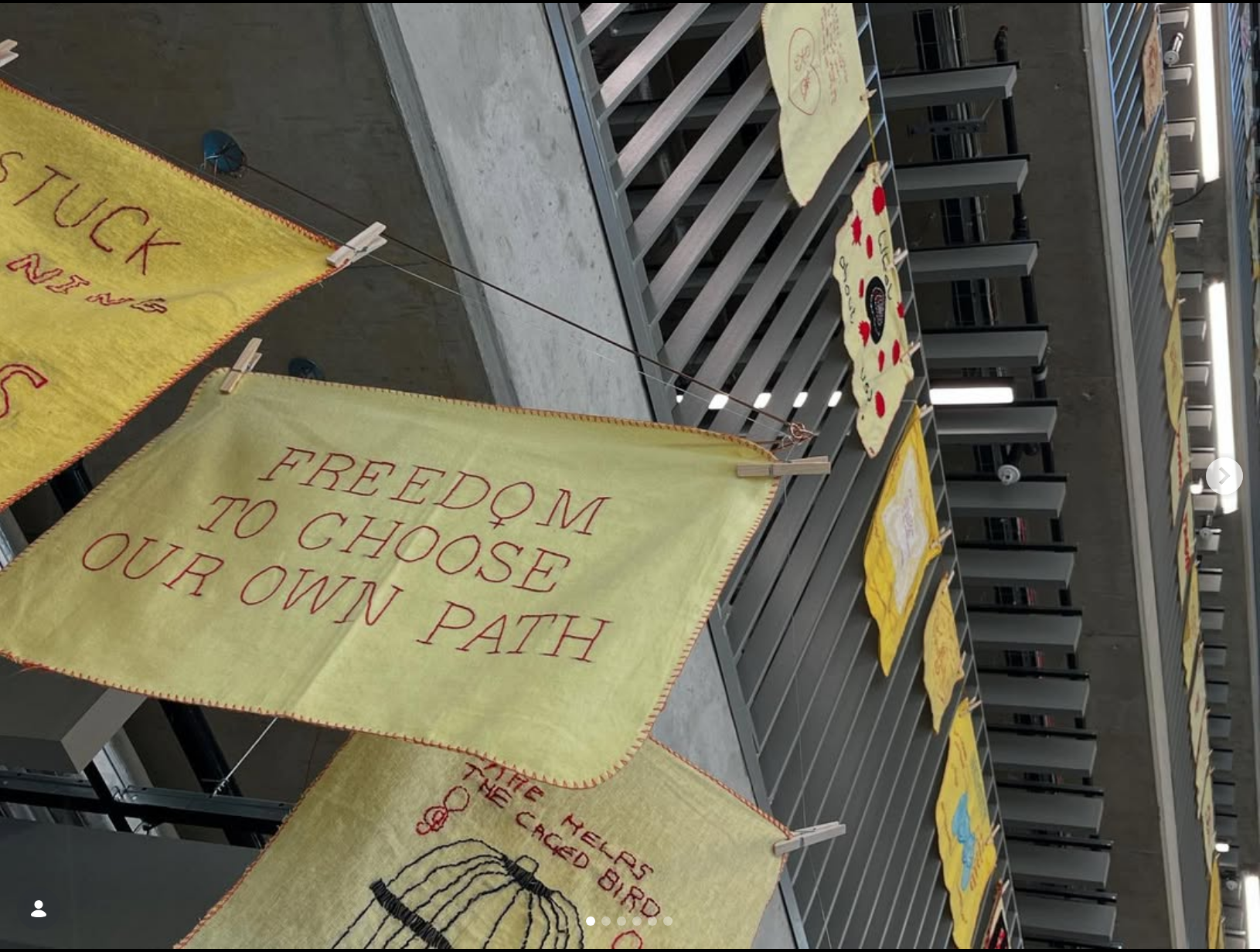
Brighton University
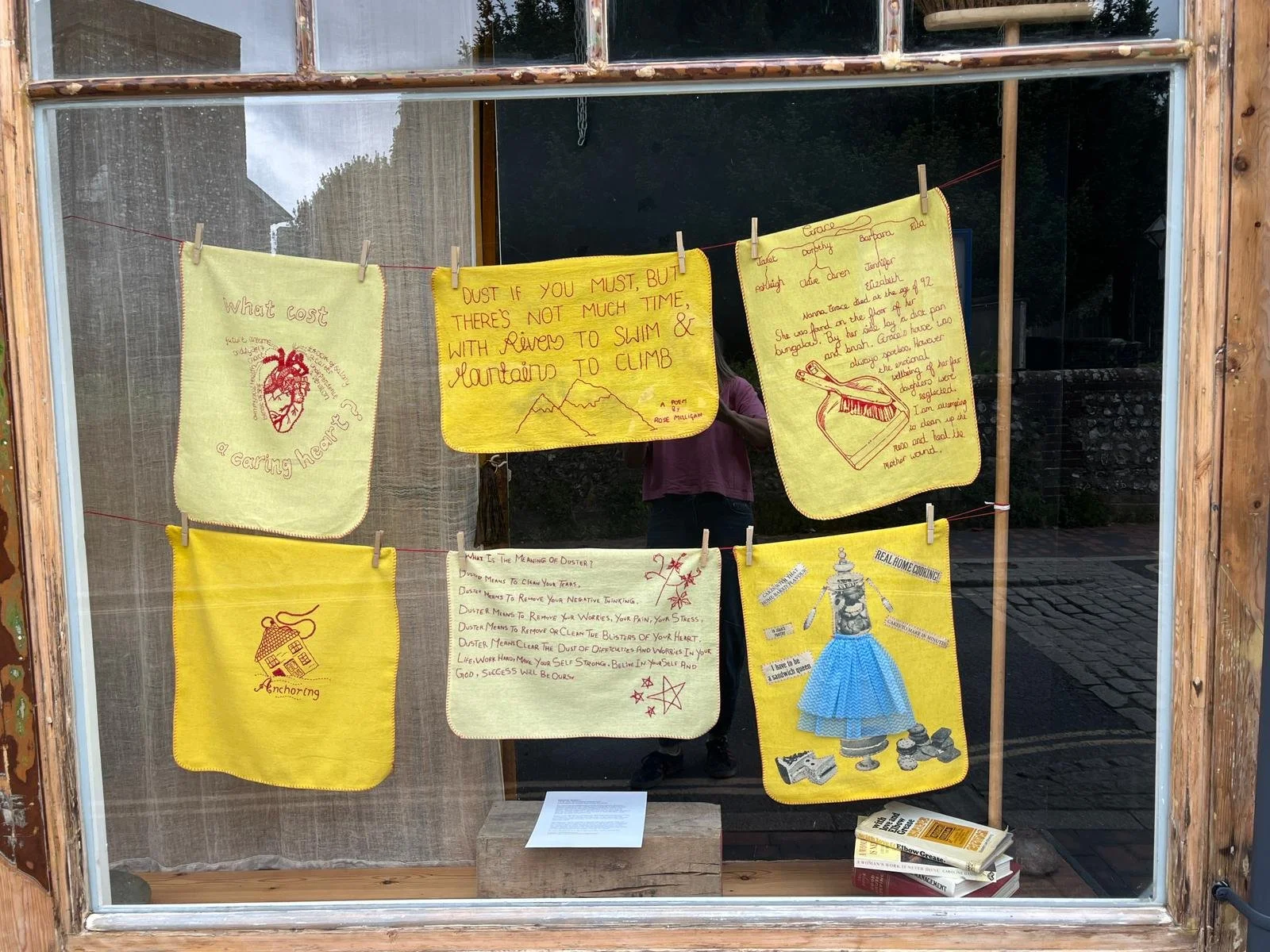
Lewes town centre